At Least a Bear Attack Won't Make You Give Up Steak (The Five for 06/05/26)
Plus...the Boomers raised us this way — Millennials spank less, liberal women are miserable, Thailand and Cambodia on the brink of war again, and Indiana Jones needs to get to Paris

Hey, welcome to The Five, a publication about the stories that matter, but don’t always make the front page.
If you’re finding this via social media…subscribe for free email delivery (unless you want to chip in $5/month…either way, you get all the content).
[one]
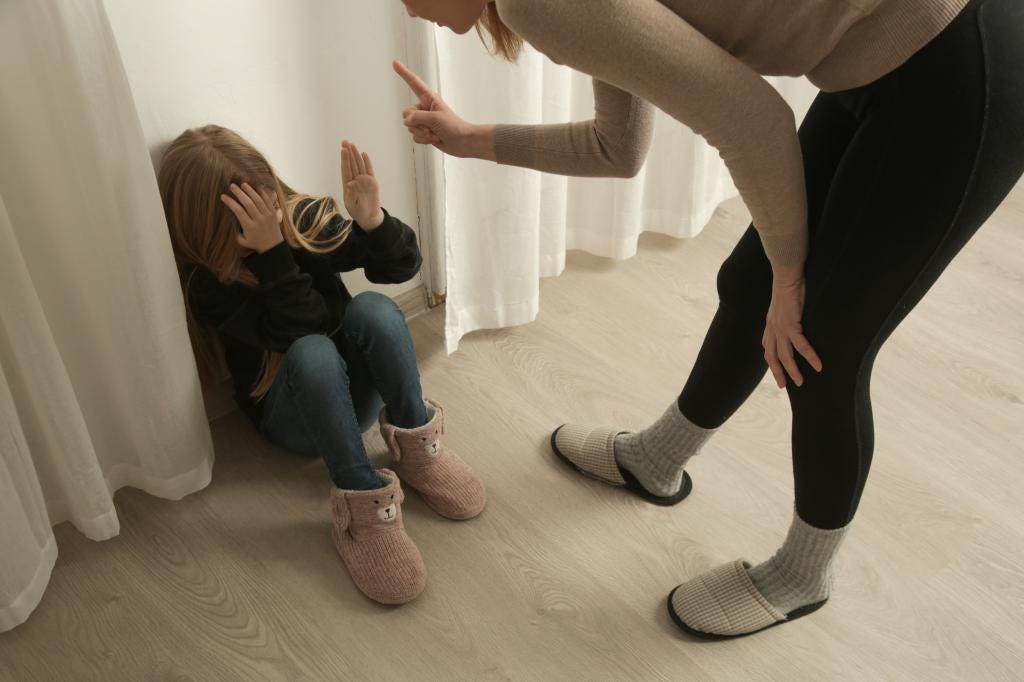
Millennials spank a lot less than other generations….which I happily support.
From the New York Post:
A recent study found that a large swath of Gen Z and millennial parents still use spanking as a form of punishment.
Published in the Canadian Journal of Public Health last month, the research revealed that when this demographic of parents was asked whether they had ever spanked their child or children with their hand, about 20% said “yes.”
Meanwhile, 45% of Gen Xers admitted to spanking their children.
Experts say the practice is not beneficial and carries serious long-term consequences.
“I generally do not recommend physical discipline,” mother, pediatrician and parenting expert Dr. Isha Mannering told The Post.
“While it may result in compliance in the moment, it does so through fear rather than by teaching the deeper skills children actually need, such as self-regulation or sound judgment.”
While younger generations use less physical discipline than their predecessors, 15% of the 4,000 adults surveyed reported believing spanking was necessary to raise a child properly.
However, Mannering notes that for children, physical discipline can normalize the use of force as a response to frustration or conflict.
She cites a 2021 study that found children who are spanked at age 3 are more likely to have externalizing behaviors by age 5 — including destroying their own belongings or being mean to or physically attacking others — than those who were not physically punished.
Meanwhile, a 2017 study found that children who are spanked are more likely to become violent with a romantic partner later in life.
The American Academy of Pediatrics (AAP) and the World Health Organization (WHO) have both taken a clear stance against spanking.
Some observations:
A). Our kids have been spanked a handful of times, for grave safetey issues (like running in the street at night), so I’m not saying I’ve never, ever done it.
B). However, II’ve noticed that the people who support frequent spanking are NEVER in support of me beating the tar out of them when I’m upset. If might makes right…then at 6’6”, I’m the most right…right? If not…then perhaps logic and reason should dictate parenting more than brute force.
C). Are Millennials perfect parents? Absolutely not. Can gentle parenting fly off the rails into a catastrophic train wreck? Sure.
But the flip side is that younger Xer’s and Elder Millennials were raised by Boomers…the reason these generations were so close to our grandparents is that our parents were pretty absent when they weren’t beating on us (on average, I’m not necessarily saying your parents or mine fit this broad arc). We were thankfully heavily influenced by the WWII/Greatest Generation…but it’s no surprise that we don’t parent the way many of us were parented.
But hey, at least Baby Boomers basically invented drug addiction, assembled groups of white hippies to spit on African American Vietnam Vets when they stepped off the plane from their drafted service (I know one in St. Louis who endured this treatment), are often absentee grandparents, AND voted in the politicians who racked up the national debt AND are working hard to make sure they don’t leave $1 to their kids when they die.
So, not beating their Millennial kids as children…would have been off-brand.
[two]
Harvard’s Arthur C. Brooks (who’s also a NYT contributor) says that Liberal Women are…really unhappy.
Max Lugavere: Ten years ago you wrote that conservative women are particularly happy — about 40% say they’re very happy, which makes them slightly happier than conservative men and significantly happier than liberal women. The unhappiest of all were liberal men, with only about a fifth considering themselves very happy.
Arthur Brooks: That was true ten years ago. Liberal women have since overtaken liberal men as the unhappiest group. What’s particularly interesting is new data showing that white liberal women under 30 have almost a 6-in-10 chance of having been diagnosed with a mental illness in America today.
It’s a really big problem, and there’s lots of speculation about what it has to do with politics, race, age, and so on. But what you find is that this is a group that’s really struggling — and it’s a pity, because it’s not good for them and it’s not good for society.
I don’t think being a political conservative is a panacea for happiness, but we do see these happiness and unhappiness effects disproportionately in different parts of the population.
The answer to unhappiness…isn’t necessarily voting differently, but caring less.
"I recommend people go on a national politics fast — a cleanse. Go two weeks and don't pay attention to D.C. at all and you'll be happier. And if you're paying attention to other stuff, you'll actually know more about what's going on — because you're being distracted from a lot of what's happening in the real country by the 5% fringes that are in the business of keeping us outraged and fired up."
-Arthur C. Brooks
This publication was started in the wake of all the unrest of COVID/George Floyd, etc. as a way to get people access to the news that matters, but may not make the front page.
And I write about Culture & Commentary on Fridays…because we need things that unite us again. Baseball. Movies. Music. Books. UFC. Art museums…pick your poison, but whatever it is, finding interests outside of political addiction can only make the country better.
And, happier.
[three]

Well, I hate to say this…but maybe stay out of the woods this summer.
From the University of Minnesota:
Late last week, the Department of Health and Human Services (HHS) announced new efforts to address Lyme disease and other tick-borne illnesses, including a pilot program to eradicate ticks on animals before they can bite people.
As part of the pilot program, researchers at the New England Center of Excellence in Vector-Borne Diseases will work with community partners, including the Indian Health Service and the Wampanoag Tribe in Massachusetts, on ways to reduce the tick population and interrupt breeding with the hope that fewer ticks will lead to fewer tick-borne infections. The Centers for Disease Control and Prevention (CDC) and HHS will helm this initiative.
This year, there has been a spike in tick activity in much of the United States. In April, the CDC reported that in most areas of the country, the weekly rate of emergency department visits for tick bites was the highest since 2017. About 31 million Americans experience a tick bite annually, with about 476,000 people undergoing treatment for Lyme disease, the most common tick-borne illness, says the CDC.
HHS Secretary Robert F. Kennedy Jr. announced the plan at a press conference in New Hampshire, which has been particularly hard hit by Lyme disease.
“We are going after this disease at its source, driving faster diagnostics and new prevention strategies, and delivering the urgency and action Americans deserve,” Kennedy said in the press release.
He also signaled his support for the reauthorization of the Kay Hagan Tick Act, named after US Sen. Kay Hagan, who died from Powassan virus. The law provided funding and a roadmap to tackle tick-borne illnesses and was first signed into law in 2019 following Hagan’s death.
Let’s pause there and read that again…a U.S. Senator died from a tick bite.
Massachusetts has been particularly hard hit, with Alpha Gal rates skyrocketing on the uber-elite island Martha’s Vineyard.
From CBS News:
The rare but dangerous – and sometimes fatal – condition makes people allergic to red meat and occasionally to products made from mammals, like dairy.
The syndrome is caused primarily by tick bites from the lone star tick, and for more than a decade was most common in Arkansas, Kentucky and Virginia, where doctors have long reported cases.
But now, as the lone star ticks’ range grows and the disease spreads, up to 450,000 Americans may be living with the syndrome, according to a Stony Brook University report.
Alpha-gal is a sugar molecule produced naturally in the bodies of many mammals, but not humans. Ticks can ingest it when they feed on other animals, and transmit it through their saliva.
When a tick bite transmits alpha-gal to a person, the body’s immune system can learn to see it as a threat, triggering the allergy. Symptoms can take weeks after the offending tick bite to develop, and range from hives to stomach pain to a life-threatening allergic reaction.
Yeah, this has radically changed how I view being in the woods in the summer. Until this year, my family hiked regularly in the summer months. Now, we’ll wait until October (at the earliest). Fortunately, Missouri winters are mild, allowing for some extra outdoor time.
I’ve already got life threatening food allergies (nuts and mushrooms). I can’t risk getting any more.
Bear attacks in Missouri and Arkansas are on the rise in Missouri and Arkansas (two hikers died in the same month last September). But all a bear can do is rip me apart and start eating me while I’m still alive.
A tick can do something much, much worse (make me only eat chicken for the rest of my life).
UPDATE: Even the NIH (which typically lags) is now saying Acupuncture could cure Alpha Gal.
[four]

This might come as a surprise to people who spend their time yelling about Russia/Ukraine and/or Israel/Hamas online…but there are actually other countries in the world outside of those two wars.
And it would be better if those countries weren’t at war. The peace between Thailand and Cambodia…is quite thin right now.
Cambodia’s government has filed notice under a U.N. agreement on maritime law for compulsory conciliation of a sea border dispute with neighboring Thailand, Prime Minister Hun Manet said Tuesday.
At issue is territory claimed by both that is believed to contain large, exploitable amounts of natural gas and other hydrocarbons.
The decision to take the matter to the the U.N. Convention on the Law of the Sea, or UNCLOS, comes after Thailand last month terminated a 25-year-old memorandum of understanding with Cambodia meant to resolve overlapping maritime claims.
Thailand unilaterally revoked the agreement in May after relations between the countries worsened last year after major armed clashes over their land border.
Last year’s fighting with Cambodia spurred nationalistic fervor, putting political pressure on Thai Prime Minister Anutin Charnvirakul to abrogate the pact.
In a live broadcast on TVK state television, Hun Manet said that his government had delivered formal notice to Thailand and to the U.N. secretary-general to begin compulsory conciliation proceedings under UNCLOS rules.
The point isn’t that Thailand and Cambodia are on the verge of all-out war. They may not be. But natural gas, nationalism, and a collapsed 25-year agreement is a combination that has started wars before. The world doesn’t pause the rest of its conflicts while we’re busy arguing about the ones already on cable news. And the ones nobody’s watching are often the ones that spiral.
[five]

And finally…it turns out burning down one of the world's most famous cathedrals has an unexpected upside.…uncovering ancient artifacts…some with writing in a language we may not know yet.
A treasure trove of artifacts are turning up around Notre Dame.
From CBS News:
As conservators cleaned what looked like ordinary medieval pottery, they found faint reddish writing painted on the inside - the same mysterious markings on shard after shard.
What they mean has yet to be deciphered.
Of everything she has cleaned from Notre Dame, Breloux said, these are the most “astonishing.”
The coins came up as black discs, eaten by rust. But under an X-ray, a face returned: it was Constantine, the Roman emperor who ruled in the early 300s AD.
Such objects also “can be invaluable in giving us the date of the (underground) layer,” Altenburg said.
The Roman finds are the ones the archaeologists value most - the deepest, oldest and least understood. In Roman times, the town was called Lutetia, and its center lay across the river, on the Left Bank.
As the Roman empire collapsed, people pulled back to the Ile de la Cite, where Notre Dame would later rise, and fortified the island with walls of stone taken from earlier buildings.
Colonna’s team found some proof: a Roman doorstep found in the dig, taken from a much bigger building, carried over, turned upside down, and laid in a road as paving.
I realize Harrison Ford is 83…but is this providing enough fodder for Indiana Jones 6? This feels like the setup for one last adventure with the famed fictional archeologist, except this stuff is real.
Until the next one,
-sth